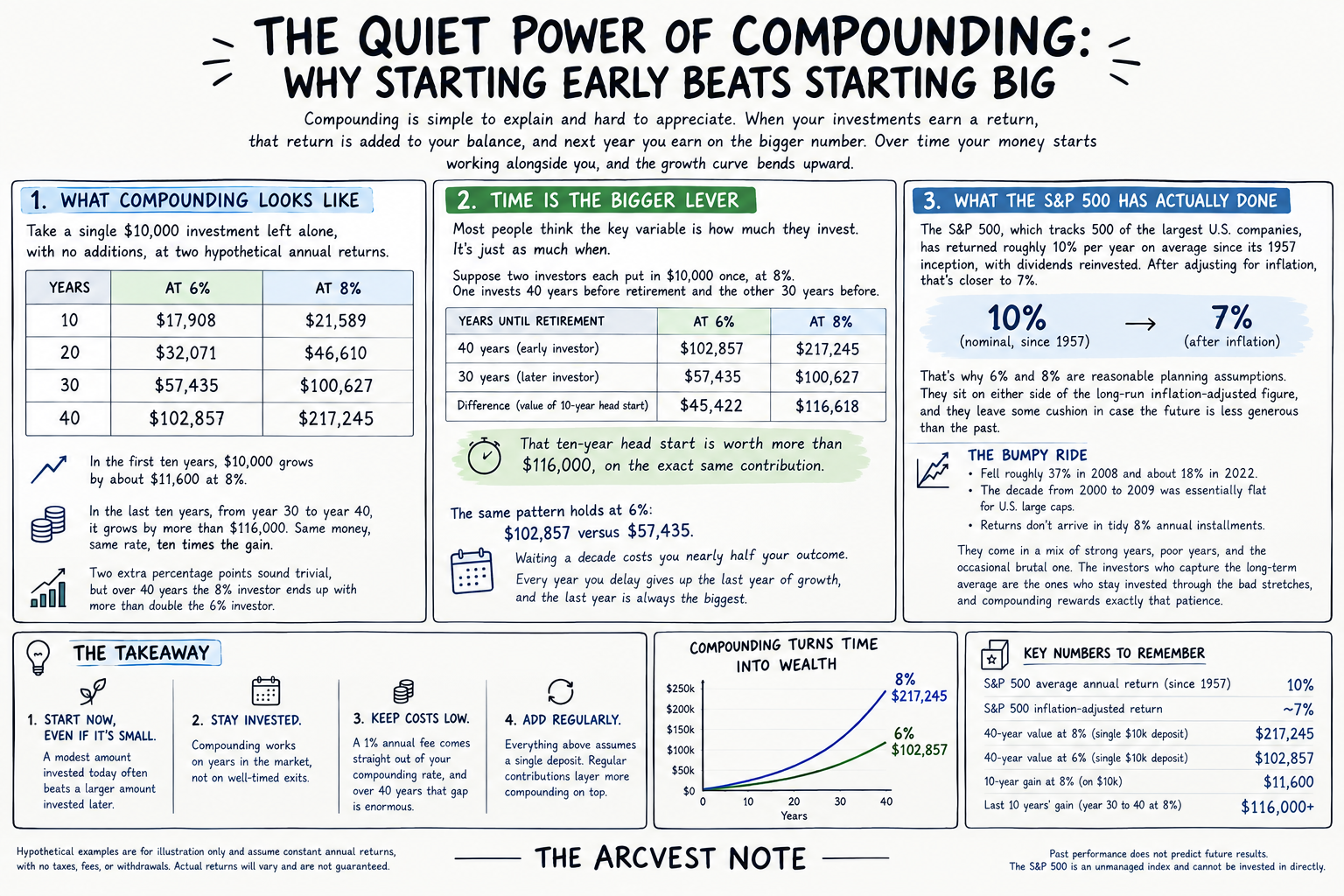
The Quiet Power of Compounding: Why Starting Early Beats Starting Big
Compounding is simple to explain and hard to appreciate. When your investments earn a return, that return is added to your balance, and next year you earn on the bigger number. Over time your money starts working alongside you, and the growth curve bends upward.
Continue reading
Invest Like A Farmer: A Simple Philosophy For Long-Term Wealth
There’s an old saying in the investment world: “Invest like a farmer.” It’s a powerful analogy because it captures the exact mindset required to build wealth over decades — not weeks. While traders obsess over the next market move, farmers focus on seasons, soil, seeds, weather patterns, and long horizons. Their work is slow, methodical, and grounded in reality. Investing can and should follow the same playbook. Below, we break down what it truly means to “invest like a farmer,” why this mindset works, and how you can apply it to your long-term financial strategy.
Continue reading
It’s All Priced In
Every market cycle produces a familiar storyline. There’s a new hot fund. A hedge fund manager who “figured it out.” A private investment vehicle that supposedly captures returns the public markets miss. A strategy that promises to sidestep volatility while outperforming the index. And hovering over all of it is an unspoken assumption:there is something out there that the market hasn’t priced yet — and if you’re clever enough, you can find it. But here’s the uncomfortable truth: Most of what you know… everyone else already knows. And if everyone knows it, it’s already reflected in the price. Understanding that simple idea that markets incorporate widely available information rapidly changes everything about how you should invest.
Continue reading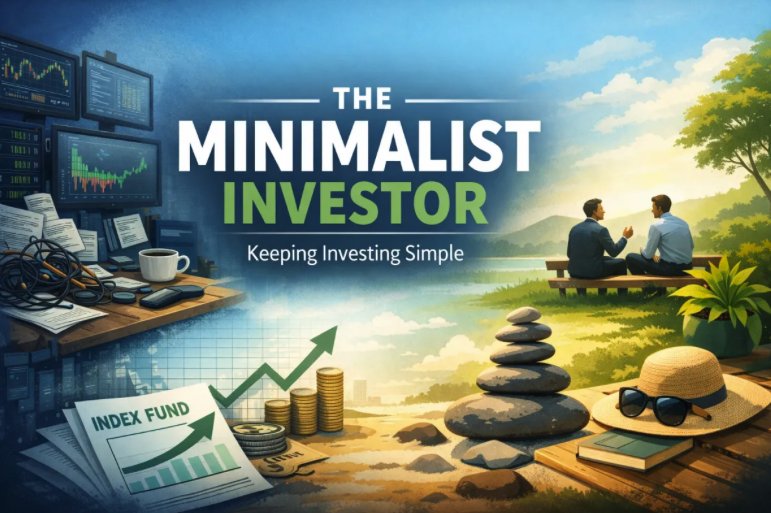
The Minimalist Investor: Why Simplicity Wins In The Long Run
Investing today feels more complicated than ever. There are more strategies, more products, more data, more commentary, and more pressure to “do something.” You can factor tilt, rotate sectors, trade volatility, optimize tax loss harvesting, and build complex alternatives portfolios. You can chase private credit, hedge with options, or try to outmaneuver the next macro shift. But here is the uncomfortable truth. Most of this complexity is unnecessary. In fact, for most investors, complexity is not just unnecessary. It is harmful.
Continue reading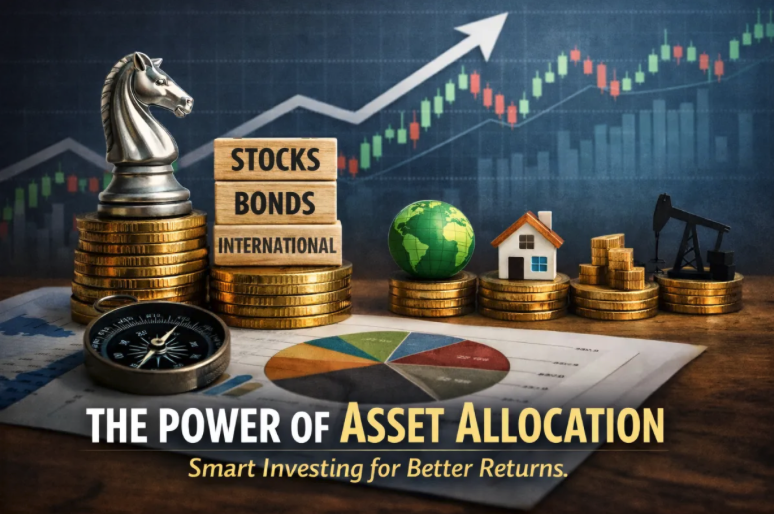
The Only Alpha That Matters: Asset Allocation
Investors spend an extraordinary amount of time chasing alpha. They search for the next great manager, the next outperforming stock, or the next tactical edge. But decades of research point to a much simpler truth. The primary driver of portfolio outcomes is not stock picking. It is not market timing. It is not access to exclusive funds. It is asset allocation.
Continue reading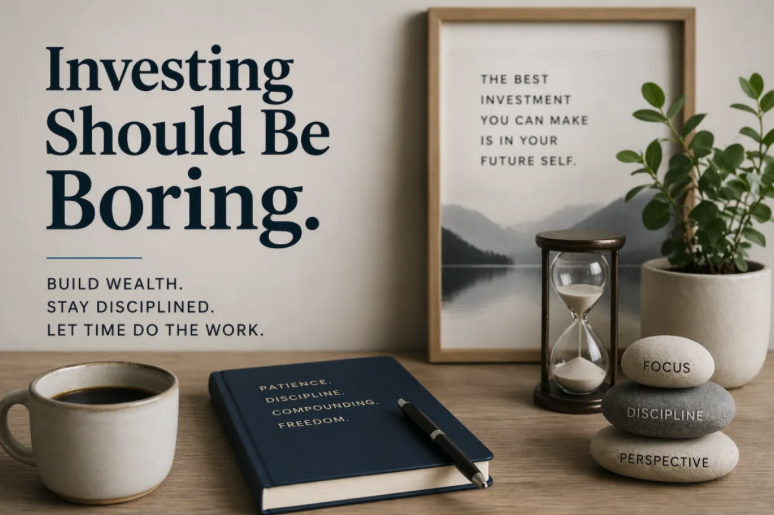
Investing Should Be Boring
There’s a strange paradox at the heart of investing. The more exciting it feels, the worse your results are likely to be. And the more boring it feels, the more likely you are to succeed. This runs completely counter to human instinct. We are wired to seek action, react to new information, and feel like we are “doing something” when money is on the line. But in investing, that instinct is often the very thing that destroys long-term returns.
Continue reading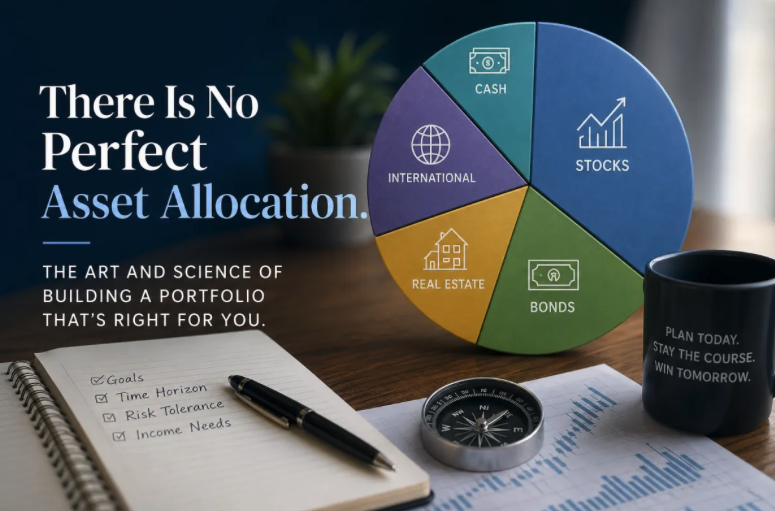
There Is No Perfect Portfolio
If you spend enough time in the world of investing, you will inevitably run into someone who claims to have found the “perfect” portfolio. Maybe it is a three-fund portfolio. Maybe it is a complex mix of eight or ten funds. Maybe it is a carefully curated list of individual stocks and bonds. The promise is always the same: better returns, lower risk, smarter construction. The truth is much simpler and far more important. There is no perfect asset allocation.
Continue reading
The Internet Made Personal Finance Too Complicated
There has never been more financial information available to ordinary investors. And yet many people have never felt more confused. Open YouTube and someone is explaining why you need a complicated options strategy to protect your portfolio. Open Reddit and you will find endless debates about factor tilts, tax loss harvesting thresholds, Treasury ladders, private credit, managed futures, and the ideal percentage allocation to emerging markets. Open social media and everyone seems to have a side hustle, a real estate empire, a crypto thesis, and a “secret” strategy that allegedly beats the market. Personal finance has become content.
Continue reading
Choosing Less, Earning More: The Case for Constraints in a World Obsessed with Alpha
In a world that celebrates unlimited choice, it feels almost unnatural to argue for constraint. The modern investor is surrounded by options. Thousands of stocks. Endless ETFs. Private markets. Options strategies. Leverage. Crypto. The list goes on. The implicit message is clear. More choice equals more opportunity. But in investing, that intuition often leads people in the wrong direction. At ArcVest, we believe the opposite is true. Thoughtful constraints are not a limitation. They are a form of freedom. When applied correctly, they lead to better decisions, better behavior, and ultimately better outcomes.
Continue reading
Get the Wealth Strategy right to your inbox for free!
Thank you for subscribing!
Have a great day!